Chayote Care - How To Grow And Harvest Chayote Vegetables
With house flesh and subtle taste, chayote sneaks on your palate and overwhelms your gustation buds with its fragile flavors. The squash-like fruits are packed with vitamin C, lots of cobweb, calcium, and potassium. You can eat it raw or cooked. Boil it and mash it like potatoes or apply it to make an apple pie without the apples. Some people stuff it with meat and make a sumptuous repast of the humble chayote. As for the leaves and shoots, they add flavors and a crunchy texture to your salads.
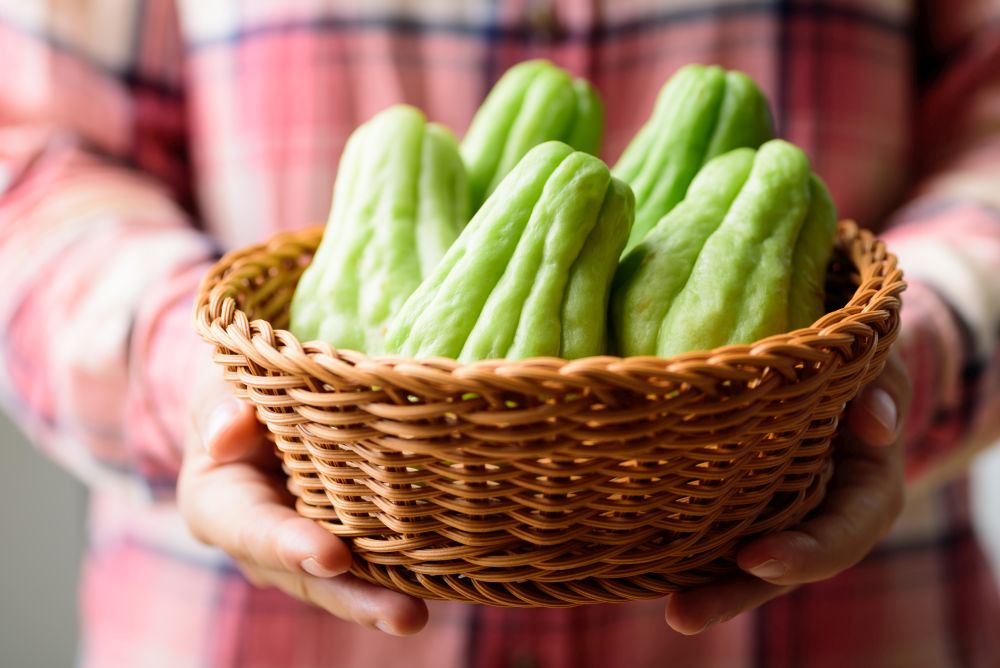
Heed you, it's the small fruits that have all these goodies. The large fruits you find at the grocery shop are more often than not bland and lack the exquisite taste y'all will find in the young chayote fruits. But since it'southward not easy to buy the immature ones for obvious reasons (the fruits sell by weight), and then you'll accept to grow them yourself. That way, you can harvest chayote fruits and relish their crisp and succulent flesh. Read on to discover out more than almost this delicious veggie and the different varieties available for you to abound and harvest.
About Chayote
Along with tomato plant, chayote (Sechium edule) was one of the few plants that Christopher Columbus carried back to Europe from his travels. After failing to find a passage to Bharat and the gold he had promised Isabella, the Queen of Spain, he offered a few veggies to placate the royal anger.
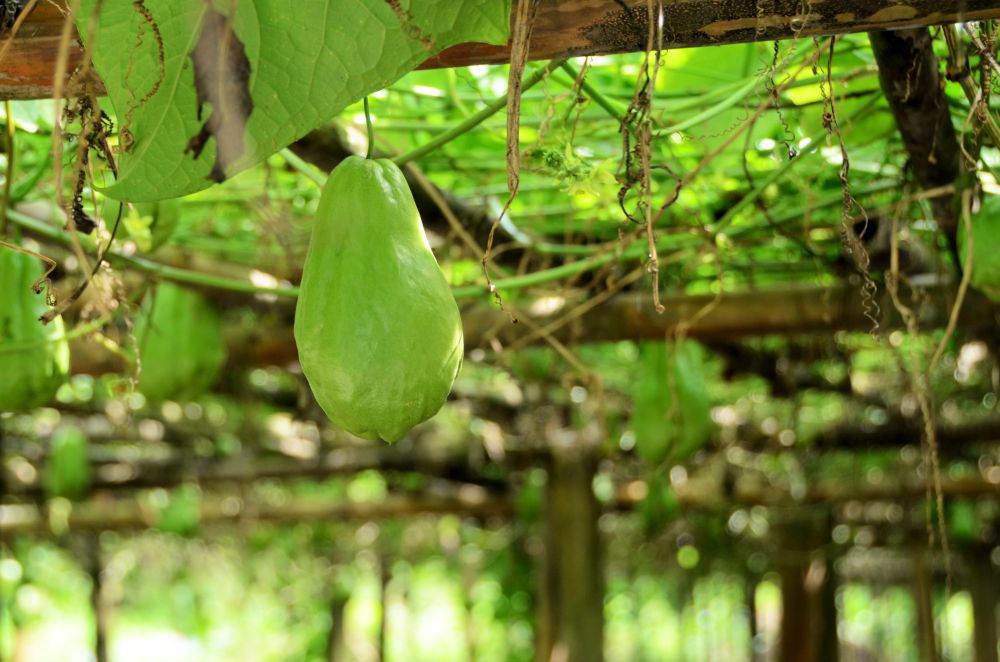
Chayote made its mode across Europe slowly merely dorsum home, it spread across the Americas like wildfire. Soon it became a staple food for the different civilizations that had sprung all over Latin America. Every bit a fellow member of the gourd family, it tends to sprawl and requires a trellis or posts to support its vines. That's important to continue the fruits off the basis and prevent rot.
The average chayote vine grows to near 36 feet high. The leaves are shaped like a heart and average near ten inches wide. Both male and female person flowers appear on the same vine, and so you don't demand to abound more than one chayote plant in your garden. The male flowers appear in clusters, while the females are solitary.
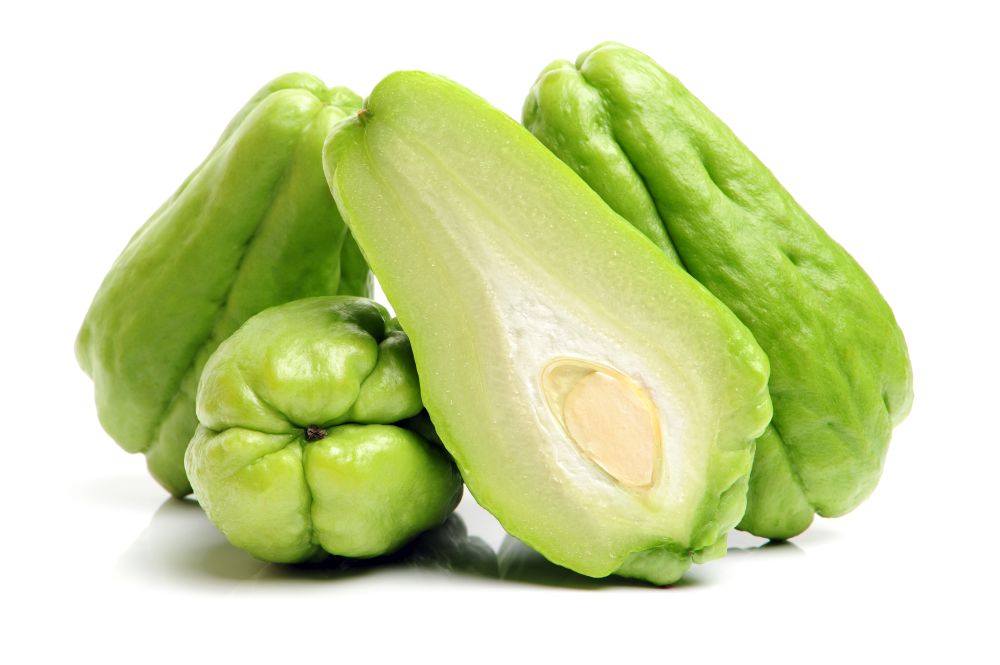
After pollination, the female person flowers develop a single fruit at the center of each flower. Unlike the shine gourd, chayote fruits take deep wrinkles that give the fruit its singular shape. The skin is always green, even on ripe fruits, while the flesh is dark-green-white. You lot don't demand to peel the skin. The whole fruit, except for the flattened pit, is edible.
Chayote Varieties
After crossing the Atlantic, chayote veggies underwent some noticeable changes. And even the species that had traveled up and downwardly the New World, became the field of study of crossbreeding to create more productive crops. Much similar squash, cucumber, and gourd, the new varieties are tastier and have softer flesh than the original species that were growing a few hundred years ago. And while most of the chayote varieties you'll find at the store belong to the mutual species, there'due south another blazon called wild chayote that grows in ravines and along river banks. The wild types are larger in size and sometimes covered with thorns. Here are a few common varieties that you tin grow in your garden.
- Chayote de Caballo: You'll find this diverseness in many grocery stores. Usually, the skin is smooth, but sometimes you'll have the odd thorn hither and there. This variety is favored past commercial farmers considering it has a long shelf life.
- Cabeza de Chango: Equally the name implies, this multifariousness is more common in Mexico and Latin American countries. It doesn't accept the same flavors as other more pop chayote varieties. Even so, each vine offers about 1 and a half times more fruits on boilerplate. Then what information technology lacks in taste, it makes up for in productivity.
- Chayotillo: Another popular variety in Mexico that has loftier resistance to diseases. The smaller fruits are usually much tastier than the big ones. Then you need to harvest it quickly and don't let it stay long on the vine.
- Perulero: This variety has fruits with yellowish peel as opposed to the green skin of the other chayote varieties. It comes originally from Guatemala but has adapted well to the different zones in the USA.
How to Grow Chayote
Although you can offset chayote from seeds, that'south not the recommended way to go most growing this veggie. For one affair, this will take a lot longer to grow the vine. Also, the formation rate of the flattened seed is close to zero to showtime with. Here'south an easier and more convenient way to grow chayote in easy steps.
- Choose a salubrious chayote fruit of the diversity you lot like at the grocery store. Make sure the skin has no cuts, brown spots, or other diseases.
- Keep the fruit in a sunny identify that doesn't get chilly winds but, at the same time, is well-ventilated. This prevents mold from developing on its surface.
- In about a week to ten days, information technology will abound a young sprout out of the narrow terminate.
- Place the sprouting chayote in a jar full of lukewarm water, with the sprouting end submerged in the h2o.
- Keep the jar in a sunny identify simply protect it against the afternoon sunday. Change the water every other day.
- When you run into the roots growing, and the sprout reaches about 12 inches tall, your chayote plant is ready to be transferred to the garden.
- Chayote is best planted when the soil temperature is above 65 degrees Fahrenheit.
- Select a sunny spot in your garden and suspension the surface of the soil. Brand sure yous have enough infinite to accommodate all 36 feet of the mature vine.
- Plan a trellis side by side to the spot you chose for the chayote institute and install information technology.
- Dig a pigsty in the soil deep enough for the whole length of the chayote fruit along with the roots growing out of it.
- Identify the fruit in the hole, making certain the shoots and leaves are above the surface of the footing.
- Fill back the hole with soil and pack it firmly around it.
- H2o the found to help the soil settle.
Chayote Care
Chayote, first and foremost, is a vine. And equally with all vines, it needs extra attending when it comes to grooming and pruning the branches and new shoots. As well water and fertilizing, the plant doesn't need much care.
Soil
Chayote grows in rich and moist soil. Cheque the construction of the soil and if it'south poor or lacks the basic nutrients, dump a lot of organic materials into information technology. The richer the soil, the better the yearly crop yous'll get out of your vine. The soil should likewise be between neutral to slightly acidic. This means that the pH levels should average between 6.0 to 6.viii. And for a institute that'due south more suited for zones seven to 10, the spot you choose for chayote needs to have full exposure to the sunlight. Chayote tin can yet tolerate partial shade, just that will bear on the productivity of the vine.
Water
For a thirsty establish like chayote, you need to pay attention to the irrigation schedule. On average, y'all demand to h2o the young constitute most iii times a week. Watering should focus on keeping the soil moist only not getting it thoroughly wet. It has a low tolerance to drought, so you should non allow the soil become dry. You lot tin can cistron in rainfall when scheduling your watering plans for the vine. Just if the top one inch of the soil goes dry out, that'southward your cue that the plant is getting thirsty. If y'all let more than than one inch of soil to dry out, dehydration will plow the leaves yellow, and the vine will start to wither and wilt.
Fertilizer
Also being a thirsty vine, chayote is also a heavy feeder. It draws a lot of nutrients out of the soil and just thrives in rich soil. Only equally is the instance with all perennials, the roots deplete the riches in the soil rather chop-chop. And so before you institute the fruit, mix in enough of anile manure and organic compost. After about six weeks, you'll need to apply a well-balanced 10-10-10 fertilizer. Yous'll demand to echo that every 6 weeks. Then in the middle of the summertime, when the fruits are yet minor, employ a generous dose of compost and anile manure. Mix it well into the soil and water the vine.
Pruning
Every bit a fast grower, chayote demands your full attending in the outset few months. You'll need to train the shoots and make sure the vine is crawling all over the trellis but non outside of it. In the fall, after you lot've harvested the terminal fruit, you'll demand to give it a good pruning. Cut it back by nigh half to protect it against the common cold winter and to encourage vigorous growth in the adjacent bound. In cold zones, you might accept to cut the vine down and embrace it with mulch throughout the wintertime. Information technology will grow back in the spring and reclaim all its territories.
Pests and Diseases
Many pests attack chayote, but the two most prominent ones are aphids and striped cucumber beetles. Aphids are those tiny insects that feed on the sap in the leaves and young shoots. You lot tin can hose them off the vine with water or use neem oil to impale them. As for striped cucumber beetles, they are a more dangerous foe. They eat young chayote vines and crusade a lot of damage to the foliage and crops. These beetles also spread bacterial diseases. So pick them past hand and drown them in a saucepan full of a mixture of h2o and bleach.
Common diseases that affect chayote plants include bacterial foliage spots. The spots might also announced on the fruits, so improve the airflow effectually the vines and don't get water on the leaves.
Harvesting Chayote
Timing is crucial when information technology comes to harvesting chayote. Luckily the fruits are ready to eat once they abound to about 4 inches in girth. Commonly, the young veggies are sweeter and tastier than old ones. On average, a chayote vine will yield nearly eighty fruits. Y'all can also collect the immature and tender shoots and employ them in salads.
Source: https://www.diys.com/chayote/

Post a Comment for "Chayote Care - How To Grow And Harvest Chayote Vegetables"